In the Lovable vs Bolt vs Replit comparison, most people who want published terms they can read should start with Lovable, while Bolt and Replit suit builders who care more about how usage is metered. Lovable has the most fully documented plans, GitHub sync, and ownership language of the three. Bolt’s terms and Replit’s hosting and GitHub details could not be confirmed.
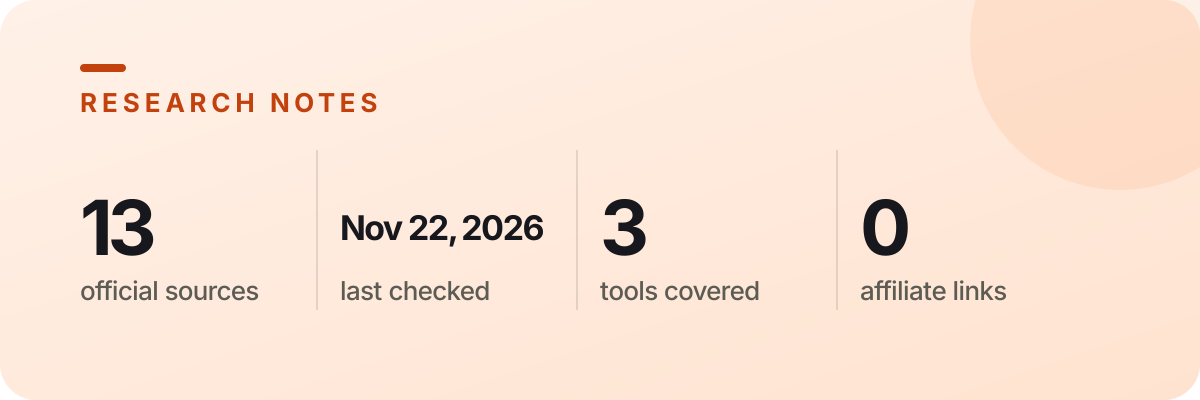
This comparison is for freelancers, founders, and small teams choosing an AI app builder. It is based on each company’s official pricing pages, docs, and terms, read on 2026-11-22. We did not run these products ourselves, and where a detail is missing from the sources, we say so.
Lovable vs Bolt vs Replit at a glance
| Lovable | Bolt | Replit | |
|---|---|---|---|
| Free plan | $0; 5 build credits per day, up to 30 per month | $0; 1M tokens/month, 300K daily limit | Not shown on the pricing page; docs mention a Starter plan, but its price and inclusions were not confirmed |
| Paid plans from | Pro $25/month, or $21/month billed annually | Pro $25/month, or $18/month billed annually | Core $20/month, or $18/month billed annually |
| Usage meter | Credits | Tokens | Effort-based credits |
| Hosting | lovable.app domains; custom domains on Pro | Built-in at *.bolt.host; custom domain on paid plans | Usage-based publishing billing |
| Code export | GitHub sync on all plans; download on paid plans | GitHub auto-commit; plan requirement not listed | Not confirmed |
| Commercial use | Terms say you own your apps and AI output | Not confirmed (terms unreadable) | Terms do not address commercial use of output |
Prices are as listed on each official pricing page on 2026-11-22.
How much do Lovable, Bolt, and Replit cost?
Lovable. Free is $0 with no credit card. Pro is $25/month, or $21/month billed annually, with 100 monthly credits by default and a selector for other tiers. Business is $50/month, or $42/month billed annually, with 100 credits by default. Business adds a team workspace, role-based access, and SSO. Enterprise is custom. The yearly toggle is labeled “2 months free.”
Bolt. Free is $0. Pro is $25/month billed monthly or $18/month billed annually ($216 per year versus $300). Pro starts at 10M tokens per month with no daily limit. Teams is $30 per member per month, or $27 per member per month annually ($324 per year versus $360). Enterprise is custom. The page says yearly billing saves up to 28%.
Replit. Core is $20/month, or $18/month billed annually. Pro is $100/month, or $90/month billed annually. Enterprise is custom. Replit’s pricing page showed several unlabeled higher monthly amounts, and its labeling of those tiers is not confirmed here. A Starter plan, its price, and any hosting or GitHub line item were not shown on the pricing page cards, so treat those as not confirmed.

How do credits and tokens actually work?
Lovable gives all plans except Enterprise 5 build credits per day. According to its plans docs, Free stops after 30 credits in a calendar month, while Pro and Business have no monthly cap. Unused monthly plan credits roll over while the subscription is active and expire two months after issue on monthly plans. A separate 20 Cloud credits per month covers database, network, storage, compute, and realtime. When credits run out, building stops, AI features in deployed apps stop, and Cloud apps pause.
Bolt’s free 1M tokens reset on the 1st of the month, with a 300K daily cap. Paid tokens reset on the renewal date, and unused tokens roll over for two months. According to Bolt’s help page, larger projects use more tokens per message, and direct code edits in Code view use no tokens. Reload tokens are limited to the highest individual monthly Pro plan or any annual Pro plan.
Replit bills paid work by effort. Its docs say simple requests typically cost less than complex builds, and the tool asks for confirmation before a paid action. Credits cover Replit AI plus cloud services such as published apps, storage, and databases. Pro credits roll over for two months. Core’s monthly credit amount is not publicly listed in the sources checked.
Where does the app live, and what does hosting cost?
Lovable publishes on lovable.app domains. Free includes 5, and Pro adds unlimited domains plus custom domains. The Lovable terms say Lovable owns the lovable.app domain and subdomains and can reclaim them.
Bolt includes hosting at *.bolt.host. Free-plan sites are public, private sites are paid only, and custom domains are on paid plans. Sites on custom domains can only be public. The pricing page lists up to 333K web requests on Free and up to 1M on Pro. Bandwidth, storage, and site-count limits were not on the help page.
Replit bills publishing by usage: outbound data transfer, Autoscale compute units, and requests. According to its docs, Core includes 100 GiB of outbound transfer, and static deployments use no compute units. Only production databases are billed, and development databases are free. Custom domains are set up under Tools > Domains, and the docs state no plan requirement. Per-app hosting costs are not publicly listed in the pages checked.

Can I get my code out?
Lovable’s GitHub sync is available on all plans. It is two-way, covers one branch at a time (the default branch), and creates private repos by default. Downloading the codebase directly is limited to paid plans.
Bolt’s help page says it auto-commits each non-breaking change and checks GitHub every 30 seconds. It requires an individual GitHub account and cannot merge branches. A disconnected project cannot be manually reconnected, and you must contact support. The page lists no plan requirement and no separate export feature. Replit’s GitHub and export details could not be confirmed.
Who owns what you build?
Lovable’s terms say you own your Customer Data, including apps you build, and the AI output you generate, subject to third-party rights. You grant Lovable a perpetual license to Customer Data, including for AI training, and you can opt out for future use. You cannot resell the services themselves.
Replit’s terms say you retain rights to content you submit, and Replit gets a license to host and modify it to run the service. They do not address commercial use of output, and paid plans may be under separate agreements that were not read. Bolt’s terms page returned no readable text, so ownership and commercial-use terms are not confirmed.
Limitations to know
- Lovable: Free projects appear to be limited to invite-only publishing, with up to 10 invitees per project (per the pricing page label; not confirmed against the docs). Yearly savings come out to $4 per month on Pro. Database size limits are not publicly listed.
- Bolt: Free sites carry Bolt branding, uploads are capped at 10MB on Free and 100MB on Pro, and bigger projects burn more tokens per message.
- Replit: Effort-based pricing makes cost harder to predict than a flat credit count. Hosting is billed separately by usage, and several details above are not confirmed.
Which AI app builder should you pick?
- Pick Lovable if you want the most clearly documented ownership terms, GitHub sync on every plan, and a free tier with daily credits.
- Pick Bolt if you prefer token metering, want built-in hosting with a stated request allowance, and want an annual solo price of $18/month, tied with Replit Core and below Lovable Pro’s $21. Check its terms yourself first, since they were unreadable here.
- Pick Replit if you want usage-based billing that covers publishing and production databases, and you are comfortable with confirmation prompts before paid actions.
Bottom line
Lovable is the easiest of the three to verify on paper, while Bolt and Replit leave more open questions about terms and export. Compare cost by how you build: daily credits, monthly tokens, or effort-based charges. Re-check each pricing page before you pay, because these plans change.